About us

Built by mainstream teachers who watched the model quietly break - and decided to do something about it.

Suffolk Sensory Kitchen was not founded in a boardroom. It was founded in two separate Food Technology classrooms, across two separate Suffolk secondaries, by two separate teachers who had arrived at the same uncomfortable conclusion: the mainstream Food Tech model - thirty bodies, fluorescent lights, fifty minutes, a different lesson next door, a different building tomorrow - is now actively harming the children we most need to reach.

We rebuilt the kitchen around the nervous system instead. The result is the provision you are reading about.

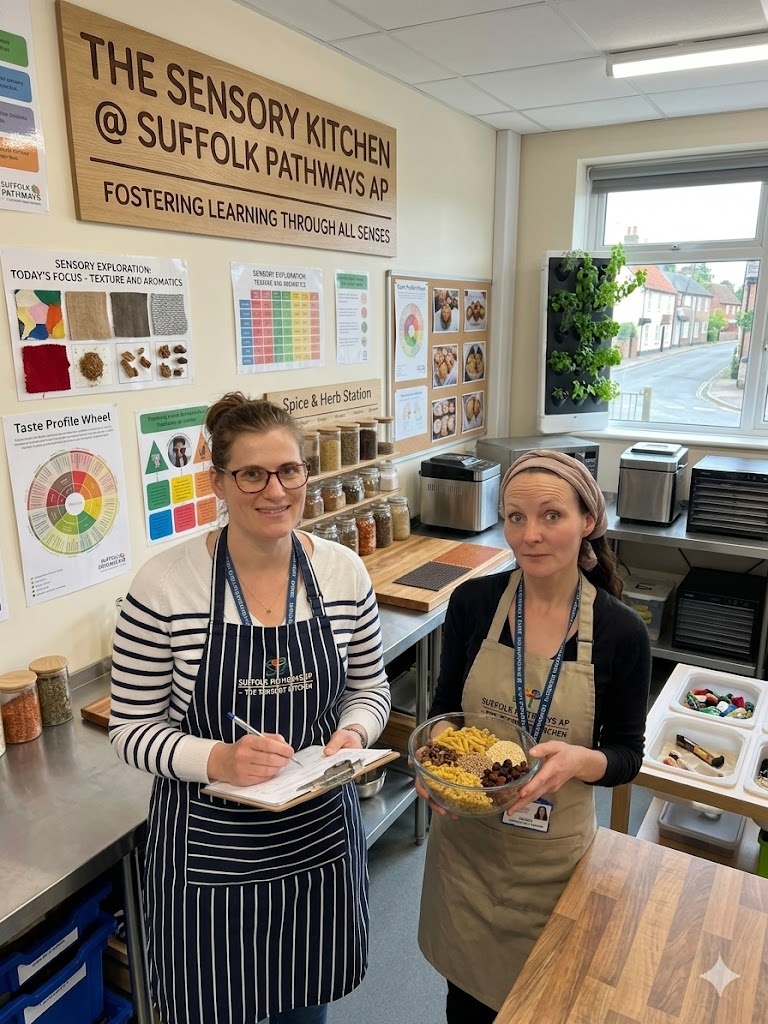
The two directors of Suffolk Sensory Kitchen standing together beneath the provision's signage.

The directors

Two qualified teachers. One shared diagnosis of what is going wrong.

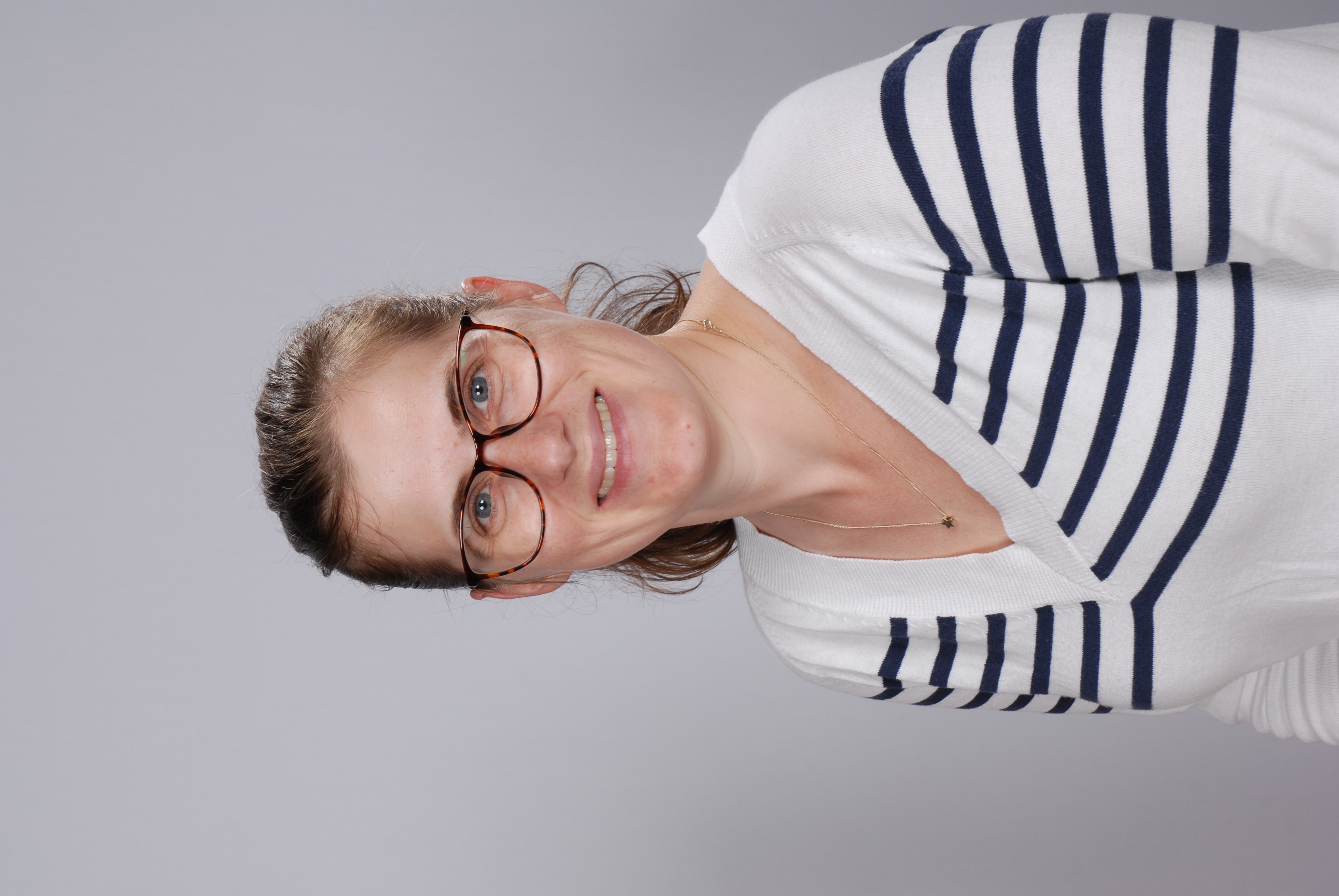
Portrait of Kirsty Wilson, Director and SENCO at Suffolk Sensory Kitchen.

Kirsty Wilson

Director & SENCO

A National Award Qualification SENCO and former mainstream Food Technology lead who now designs every learning pathway through a trauma-informed lens.

Kirsty trained as a Food Technology and Design Technology teacher and spent the first chapter of her career inside Suffolk and Norfolk mainstream secondary schools, leading busy kitchens packed with thirty Year 9 students at a time. The deeper she moved into pastoral leadership, the more she noticed the same pattern: the children sliding off roll were rarely the ones who could not cook - they were the ones whose bodies could no longer cope with the noise, the smells, the time pressure and the visible failure of a curriculum built for thirty identical learners.

She gained the National Award for Special Educational Needs Co-ordination and moved into a full-time SENCO role, where she worked closely with families experiencing Emotionally Based School Avoidance (EBSA), autistic burnout and the long aftermath of pandemic disruption. Her conviction grew that for a small but rising group of teenagers, the route back into learning would not be through a normal timetable - it would be through the rhythm of preparing a meal in a room small enough to feel safe.

Today Kirsty leads on assessment, EHCP-aligned target setting, SEND adaptation, and the day-to-day safeguarding of every young person on roll. She holds Designated Safeguarding Lead status and is the named contact for referring schools and local authority commissioners.

[REQUIRES USER INPUT: Specific qualifications, years of experience, previous schools, DSL training date, NASENCO award year, additional certifications.]

“We do not ask a dysregulated nervous system to revise GCSE bullet points. We ask it to chop an onion. Confidence comes back through the hands first.”
- Kirsty Wilson
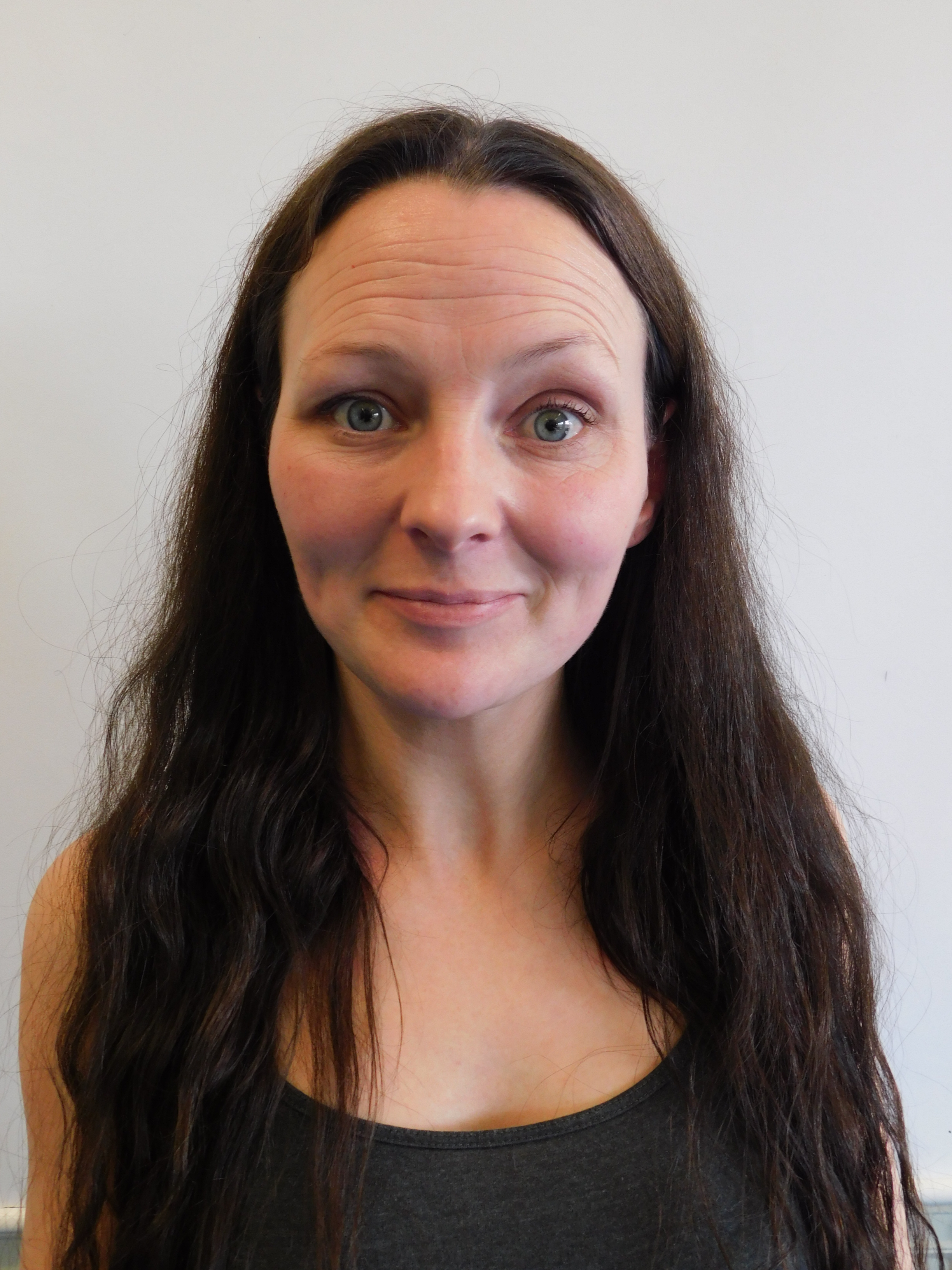
Portrait of Selina Finch, Director and Head of Curriculum at Suffolk Sensory Kitchen.

Selina Finch

Director & Head of Curriculum

A former Head of Food Technology with a specialism in nutrition science and a long-standing interest in the gut-brain axis as a route to emotional regulation.

Selina began her career as a chef before retraining into secondary teaching, where she went on to lead Food Technology departments and develop schemes of work for mixed-ability cohorts including significant numbers of pupil premium and EAL learners. She has examined GCSE Food Preparation & Nutrition coursework and written cross-curricular projects linking food technology with PSHE, science and citizenship.

Over the last decade, Selina watched the cost-of-living crisis collide with the post-pandemic mental health crisis inside her own classroom. Families were skipping meals; students were arriving on energy drinks and crisps; behaviour incidents in the afternoon were almost predictable from what had - or had not - been eaten at break. She began informally teaching small groups of dysregulated students how to cook for their younger siblings, and saw the pattern that now sits at the heart of Suffolk Sensory Kitchen: learning lands when bodies are fed and calm.

Selina leads on the four-module Modern Home Economics curriculum, on cross-contamination and allergen control under Natasha's Law, and on parental engagement. She is responsible for ensuring every recipe, every shopping list and every session plan is anchored in evidence - drawing on Public Health England guidance, the NHS Eatwell Guide, and the growing body of research on nutrition and adolescent mental health.

[REQUIRES USER INPUT: Specific qualifications, Level 3/4 Food Safety certifications, years of experience, examining board, previous schools, any nutrition or psychology qualifications.]

“A teenager who can feed three people for ten pounds has just walked into adulthood with something that no exam grade alone can give them.”

- Selina Finch

Our philosophy

Five principles we will not negotiate on.

These principles were written before we registered the company. They are reviewed by the directors annually and they govern every decision the provision takes - from the lighting we choose to the words we use when we telephone home.

  1. The nervous system is the curriculum.

    Before reading, writing, weighing, planning or peeling, we regulate. Sessions begin with a predictable, sensory-light arrival routine - a familiar drink, a low-stimulus visual schedule, a brief check-in - because no learning of any depth will land on top of fight, flight, freeze or fawn.

  2. Stealth learning, not stealth lying.

    We hide the maths inside the scales and the literacy inside the recipe, but we are honest with the young person about what they are doing. Hidden learning is not the same as misleading the learner. Every student leaves each session knowing exactly which skill they have just built.

  3. Trauma-informed does not mean low expectations.

    We use real knives, real heat, real sharps, real timings. Our risk assessments scaffold the demand; they do not remove it. Young people leave us able to cook a meal for their family - not because we lowered the bar, but because we paced the climb.

  4. The home school is a partner, not an audience.

    We share weekly written updates with the dual-registered school. We attend annual reviews. We are present at TAFs and EHCP reviews. Reintegration is a shared piece of work, not an event we hand the young person back at.

  5. Honesty about what we are not.

    We are not a CAMHS service, an ARP, a unit for behaviour-only profiles, or a substitute for a properly funded EHCP. Our SLA is explicit about when we will, and will not, accept a referral, and when we will, in honesty, recommend the placement ends.

The wider picture

A short timeline of the UK Alternative Provision crisis.

Understanding the policy backdrop matters: it is the reason demand for high-quality, specialist APs has outpaced supply across Suffolk.

  1. 2014 - The Children and Families Act 2014

    Replaced statements with EHCPs. Set in motion the demand pressures that local authorities are still navigating today.

  2. 2018 - Edward Timpson’s Review of School Exclusion

    Found that vulnerable children - those with SEND, those eligible for free school meals, those known to social care - were disproportionately excluded, and that AP quality varied widely.

  3. 2020–22 - Pandemic and post-pandemic disruption

    School closures, isolation, screen saturation and household financial shock generate a cohort of young people whose anxiety and avoidance crystallised into full EBSA.

  4. 2022 - DfE SEND and AP Green Paper

    ‘Right support, right place, right time.’ Government acknowledges that the AP market is fragmented and demand is rising sharply, particularly outside London.

  5. 2023 - DfE SEND and AP Improvement Plan

    Confirms the direction towards three-tier APs (Tier 1 targeted in mainstream, Tier 2 time-limited intensive, Tier 3 transitional). Sets the policy frame our provision is designed inside.

  6. 2024–25 - Severe absence reaches record levels

    Departmental statistics on absence and persistent absence make clear that EBSA is no longer a niche concern - it is one of the defining education stories of the decade.

  7. 2026 - Suffolk Sensory Kitchen

    Designed deliberately as a Tier 2 / Tier 3 specialist culinary provision, offering 6–12 week placements that hold the young person while a long-term plan is built around them.

Above is a deliberately abbreviated overview. For a fuller policy bibliography for commissioning bids, see Commissioning.

What we are

A specialist, time-limited, trauma-informed kitchen-based Alternative Provision, working in partnership with the home school and the local authority.

What we are not

A holding pen, a behaviour unit, a substitute for therapeutic services, or a permanent placement for any young person beyond the agreed reintegration plan.

What we measure

Attendance recovery, sensory-load tolerance, self-rated regulation, family confidence, and successful step-up to an agreed next setting.

Ready to start a referral conversation?

Our directors take all initial commissioning calls personally. There is no sales team and no aggressive follow-up - only honest, professional dialogue about whether we are the right setting for the young person you have in mind.

Open the commissioning page →